Bird's-eye view
Almost straight down from above. Maps, crowds, patterns, a figure alone in a space.
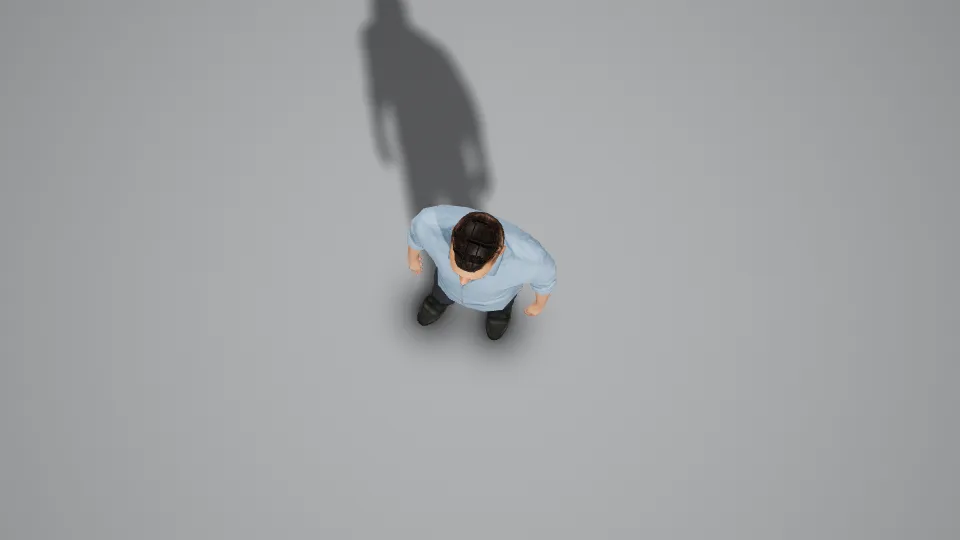
- Height
- 4.6 m
- Distance
- 0.5 m
- Tilt
- 82° down
- Lens
- 35 mm
- Size
- Full body
What it does
Faces almost disappear, because the lens sees hair and shoulders where it would usually see eyes. With the ground filling the frame there is no horizon, so depth flattens into shapes on a floor plan. Position stays readable: who stands near whom, which way somebody walks, where the shadows fall. A figure alone can look very small from here.
When to use it
Pick it for a chef laying out ingredients, a body found on bathroom tiles, or cars turning through an intersection. Another common use is a sports play or a dance routine, where positions count more than faces.
Writing the prompt
Write "bird's-eye view, camera directly overhead, looking straight down" and name the surface below, such as "wet asphalt" or "patterned rug". Leave out "horizon" and "sky", because neither can appear.
Easily mixed up with
Bird's-eye view
Almost straight down from above.
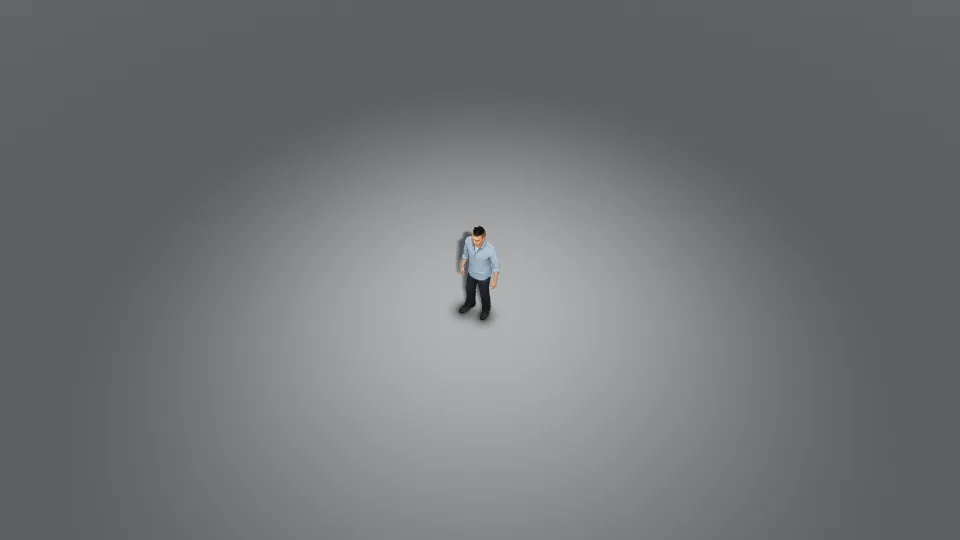
Aerial view
Looks down at a slant from far off, so distance and often the horizon show.
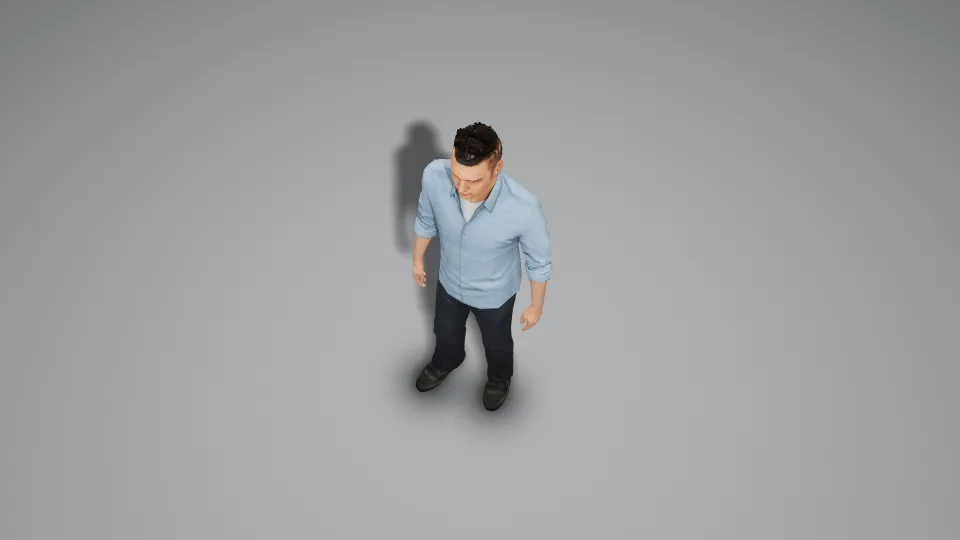
Extreme high angle
Steep but not vertical, so a raised face stays in view.