Dutch angle
The horizon tips to one side. Unease, madness, a world off balance.

- Height
- 1.6 m
- Distance
- 1.95 m
- Tilt
- 9° down
- Lens
- 35 mm
- Roll
- 16°
- Size
- Medium shot
What it does
Walls, doors and shelves all slant, because the camera is rolled around the axis of its lens. The horizon crosses the frame at an angle, and lines that would run parallel to the frame edges lean to one side. The roll can be slight or steep. It is commonly used to suggest unease, tension or disorientation.
When to use it
Tilt the frame when a guard finds the cell empty, a drunk walks home, or a polite dinner turns hostile. Horror scenes, nightmares and stories about a troubled mind are other classic uses.
Writing the prompt
Give the slant something to show against: "Dutch angle, camera rolled 20 degrees, tilted horizon, tiled wall". Straight lines such as door frames make the roll visible. Say which side of the frame is lower.
Easily mixed up with
Dutch angle
The horizon tips to one side.
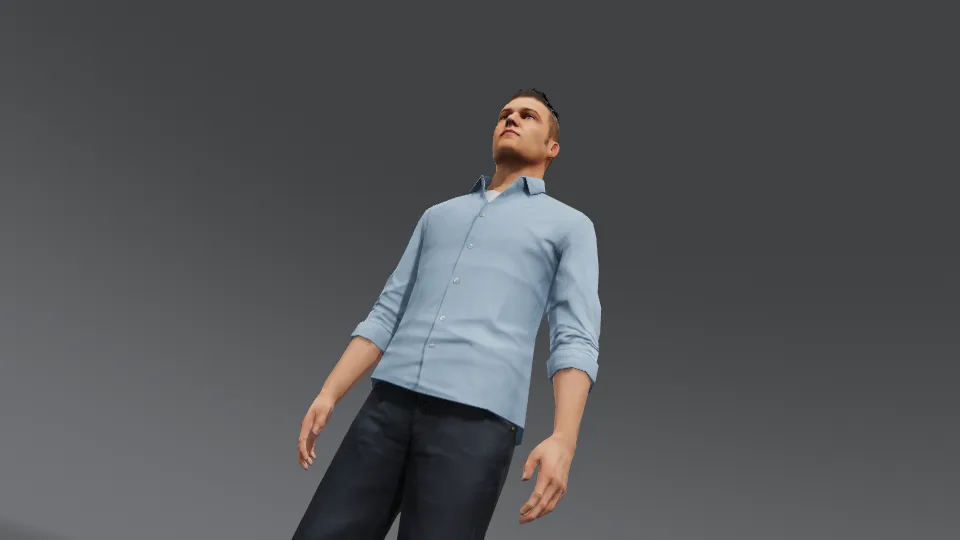
Low Dutch angle
Adds a low camera looking up, which is often used to suggest threat.

Tip into Dutch
Begins level and rolls over while the viewer watches.