Wide over the shoulder
Both bodies, one from behind. Entering a conversation.
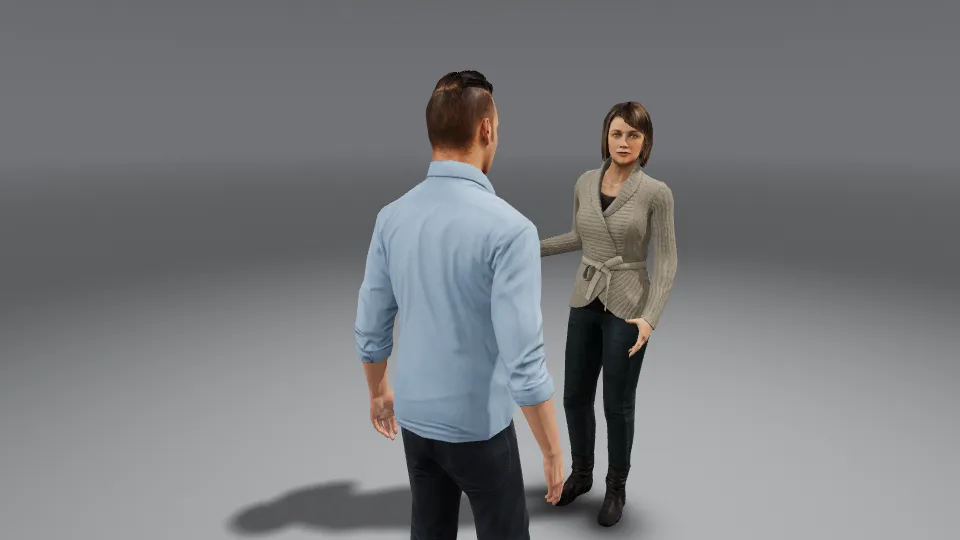
- Height
- 1.7 m
- Distance
- 2.6 m
- Tilt
- 14° down
- Lens
- 24 mm
- Size
- Full shot
What it does
From farther back, both stances and the floor between them are visible. The near figure stands at the edge of the frame with the back turned, and the far figure is smaller, with more of the room around it. The gap between the two is easy to judge. Directors often open a dialogue with it.
When to use it
Start here as a courier meets a guard, a teenager faces the principal or strangers stop at a locked gate. It is often used again when one person crosses the room toward the other.
Writing the prompt
Write "wide over-the-shoulder shot, near person from behind in the foreground, far person full body" and describe the floor between them. Leave out "tight" and "close-up".
Easily mixed up with
Wide over the shoulder
Both bodies, one from behind.
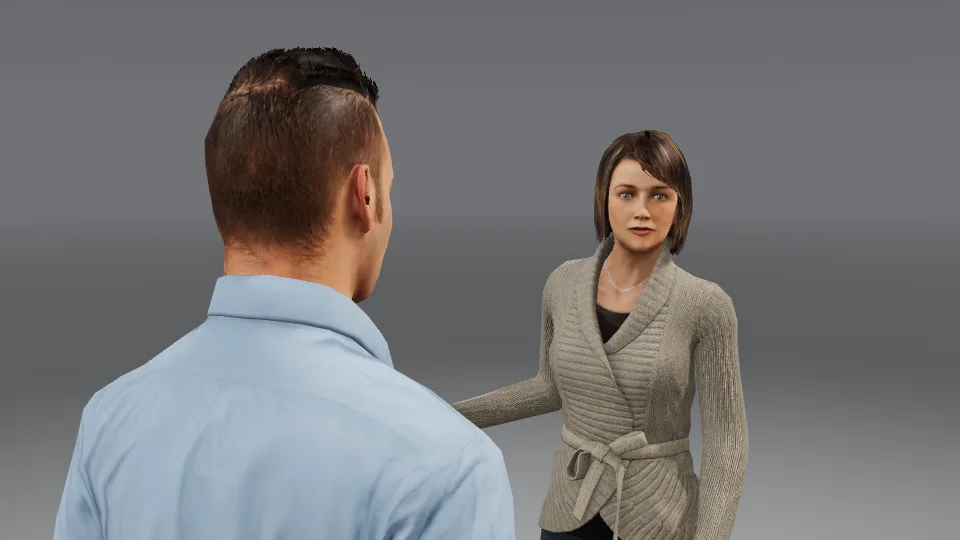
Over the right shoulder
Crops both people near the chest and hides most of the room.
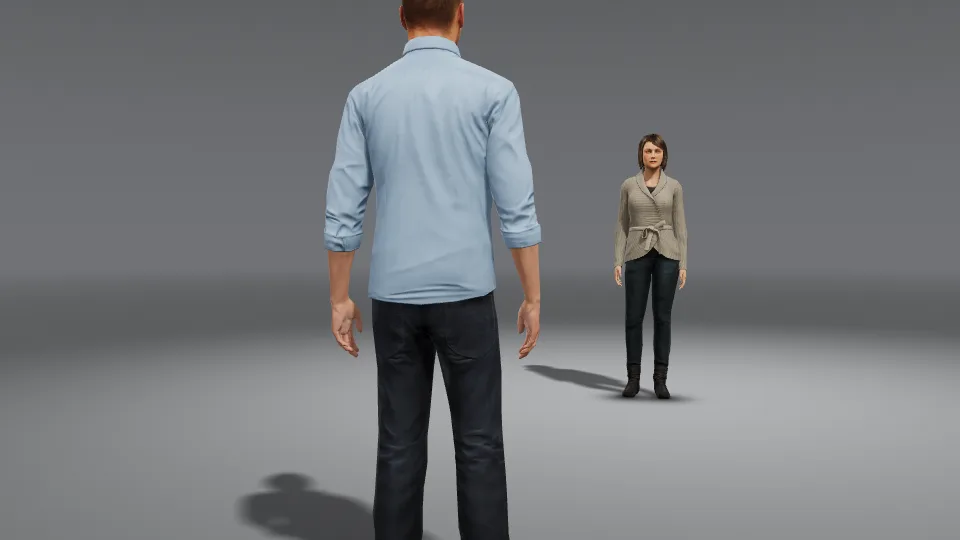
Standoff
Makes the near figure very large and the other small and distant.